A First Visit to an Unfamiliar Cinema
A first visit to an unfamiliar cinema feels calmer when you plan the journey, handle your ticket and settle into the auditorium without rushing.
The common mistake on a first visit to an unfamiliar cinema is treating the advertised start time as the time to arrive. That can leave you scrambling through ticket instructions or trying to recognise your seat in a dim auditorium. A little preparation beforehand makes the first visit feel less like a test.
Prepare for your first visit to an unfamiliar cinema
Before leaving, check the cinema’s address, entrance details and booking instructions. Keep your ticket or confirmation easy to open, and note any access information or late-entry guidance that applies to your screening.
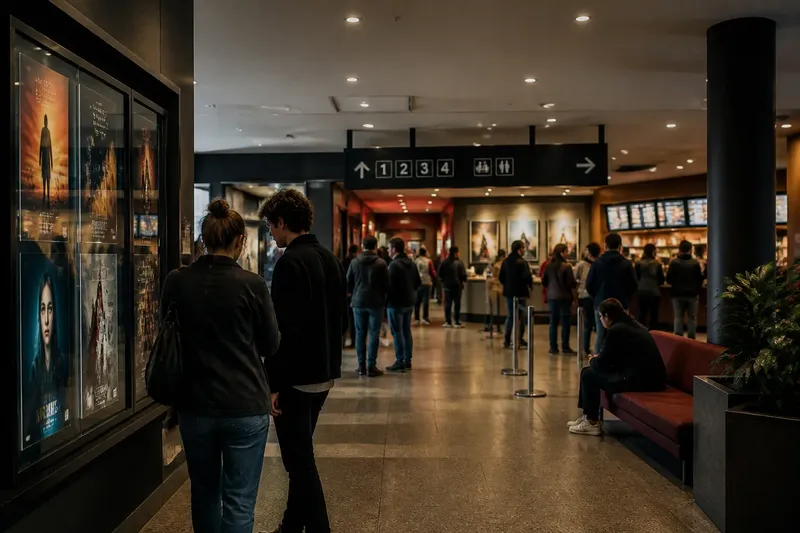
If the venue is inside a larger building, such as an arts centre or shopping complex, check which entrance serves the cinema. When the information is unclear, contact the venue rather than relying on a map pin or guessing from the outside.
- Check the address; if it matches your booking, use it for your route, and if it does not, confirm the correct venue before setting off.
- Check the entrance note; if it names a specific door, head there, and if it is absent, look for cinema signage or ask venue staff.
- Check the ticket instructions; if they call for a mobile scan, open the code before joining the queue, and if they require collection, go to the stated desk.
- Check the screening time and any late-entry note; if the venue gives an arrival instruction, follow it, and if no instruction appears, leave enough time for your journey and a calm entry.
- Check whether you need access support; if you do, contact the cinema or speak to staff on arrival, and if you do not, keep the usual ticket and route details to hand.
- Check that your phone can display the booking; if it can, keep the confirmation ready, and if it cannot, use a printed ticket or ask the cinema how to retrieve the booking.
Let the first visit teach you the auditorium routine
Think of the first visit as learning the sequence that matters for your screening, not memorising the whole building. Once your ticket has been accepted, follow the auditorium number on your booking and ask an usher if the route or door is unclear.
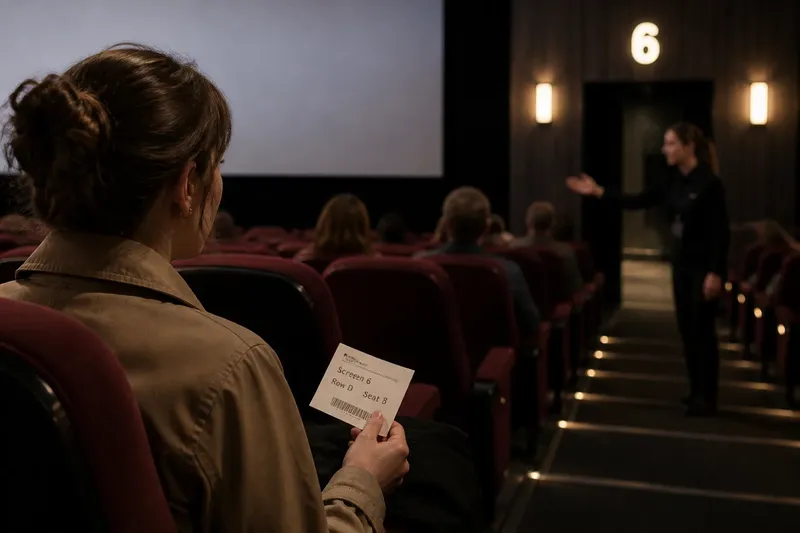
At the auditorium entrance, check the row and seat details before moving into a crowded line. If the lighting makes the numbers hard to read, pause at the side and ask for help rather than searching across occupied seats.
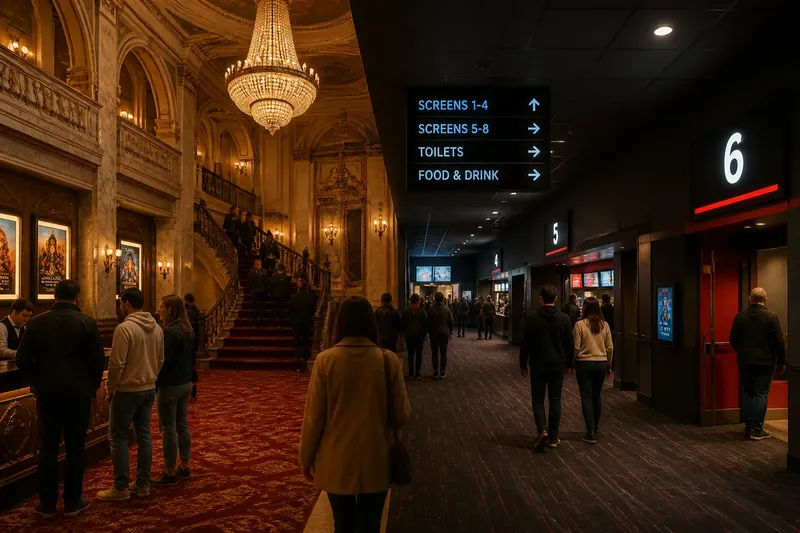
Imagine your booking shows Screen 6, Row D, Seat 8, and the entrance leads to two corridors. You follow the sign marked Screen 6, then show your ticket to an usher when the row markers are difficult to see; the result is that you reach the correct seat without guessing or disturbing people already settled.
Settle into your seat with the room in mind
Keep your coat, bag and drink within your own space, clear of the aisle and neighbouring seats. Silence your phone and take a moment to note the nearest aisle and exit signs, especially if you may need to leave during the screening.
If your seat, access route or place in the room is not suitable, tell staff before the film begins where possible. They can explain the options available at that venue.
What should you do if the first visit feels confusing?
What if my ticket will not scan?
Step out of the queue if you can and show the booking confirmation to a member of staff. They can check the booking or direct you to the right desk without holding up other guests.
What if I cannot find the auditorium?
Stop somewhere that is not blocking a doorway or corridor and ask an usher to point you towards the screen number on your ticket. Avoid following a crowd unless its destination is clearly marked.
What if I arrive before the auditorium opens?
Check the venue display or ask staff when entry is expected. Wait in a public area without blocking the entrance, and keep an ear out for announcements.
What if I need help with access or seating?
Tell a staff member what would make entry or seating easier, using the details relevant to your visit. If you have arranged support in advance, mention that arrangement so staff can direct you appropriately.
Carry the useful lesson into your next screening
After the film, notice which details would help next time: the entrance you used, how tickets were checked, and whether the auditorium route was easy to follow. Save only what is useful, such as the venue’s access page or a travel note, rather than trying to memorise every turn.
For a first visit to an unfamiliar cinema, the most helpful preparation is knowing what your ticket requires and whom to ask when something is unclear. Once those two things are settled, you can give the screening your attention instead of trying to learn the entire building at once.